Lessons from Okinawa: The Deeper Meaning of Shuri-Te
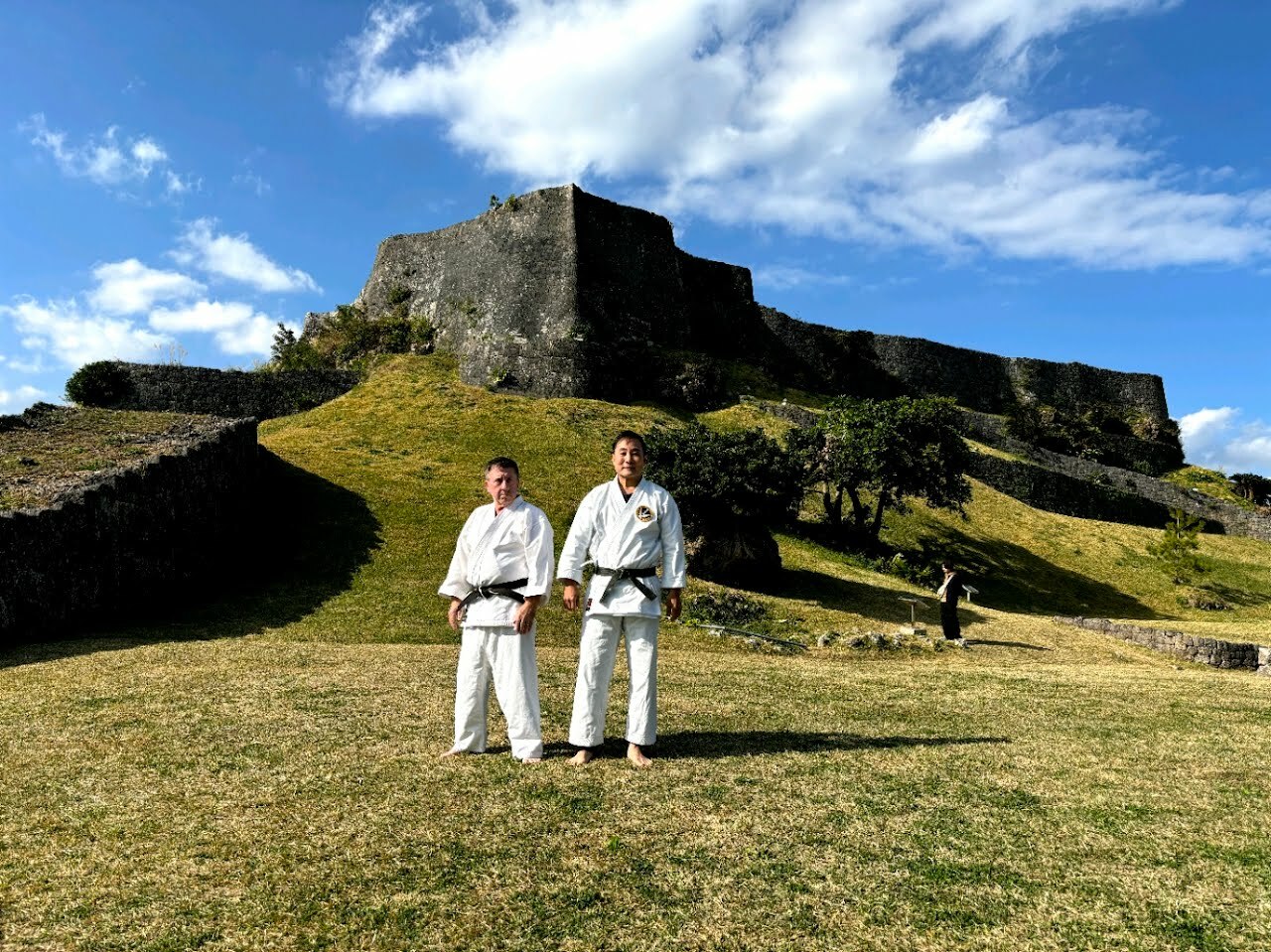
Karate in Okinawa is not confined to the dojo. It is woven into the very fabric of the island’s culture—expressed through its language, history, food, and philosophy. To truly understand Shuri-Te, one must experience all of these elements, for they are all part of Kata—the essence of Okinawan martial arts.
During my time in Okinawa, Nakamura Sensei emphasized the importance of Hogan, the indigenous Okinawan language, within the dojo. Some concepts, he explained, simply cannot be translated into Japanese or English; they represent a unique way of thinking. This linguistic distinction underscores a deeper truth: Shuri-Te is more than just a system of combat—it is a legacy, a philosophy, and a responsibility.
Historically, those who trained in Shuri-Te had one purpose: to protect the king. Their entire lives were dedicated to this duty, honing their skills to defend against threats, particularly samurai warriors, who traditionally carried two swords. These Okinawan warriors, often called the weaponless warriors, developed techniques to neutralize armed opponents, a necessity in their role as royal guardians.
But these techniques were closely guarded secrets. The fear was that if they fell into the wrong hands, they could be turned against their own people. As a result, many of these methods have been lost over time. Today, there is no king to protect, no samurai to fight, and so these techniques are rarely practiced. And yet, in the heart of Shuri-Te, some of them still survive, passed down through Hogan—but only to true Okinawans.
Nakamura Sensei often repeated a mantra in training: “More speed! Act like a spring!” The techniques of Shuri-Te are not just about power but about precision, explosiveness, and instinct. They are a reflection of Okinawa itself—resilient, adaptive, and deeply connected to its past.
In the end, my time in Okinawa taught me that karate is not simply a set of movements; it is a way of life, shaped by centuries of tradition and preserved through those who continue to live its philosophy.